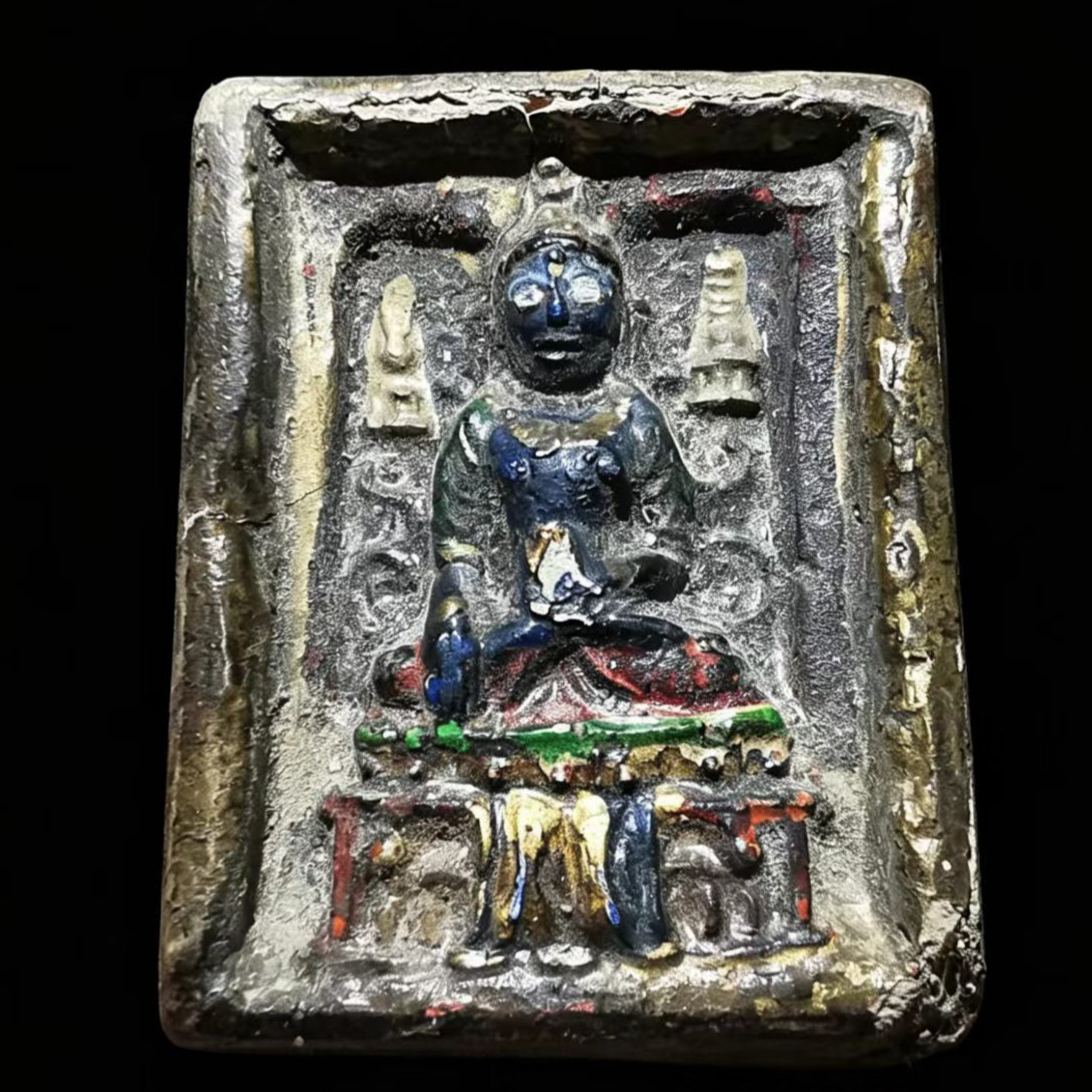
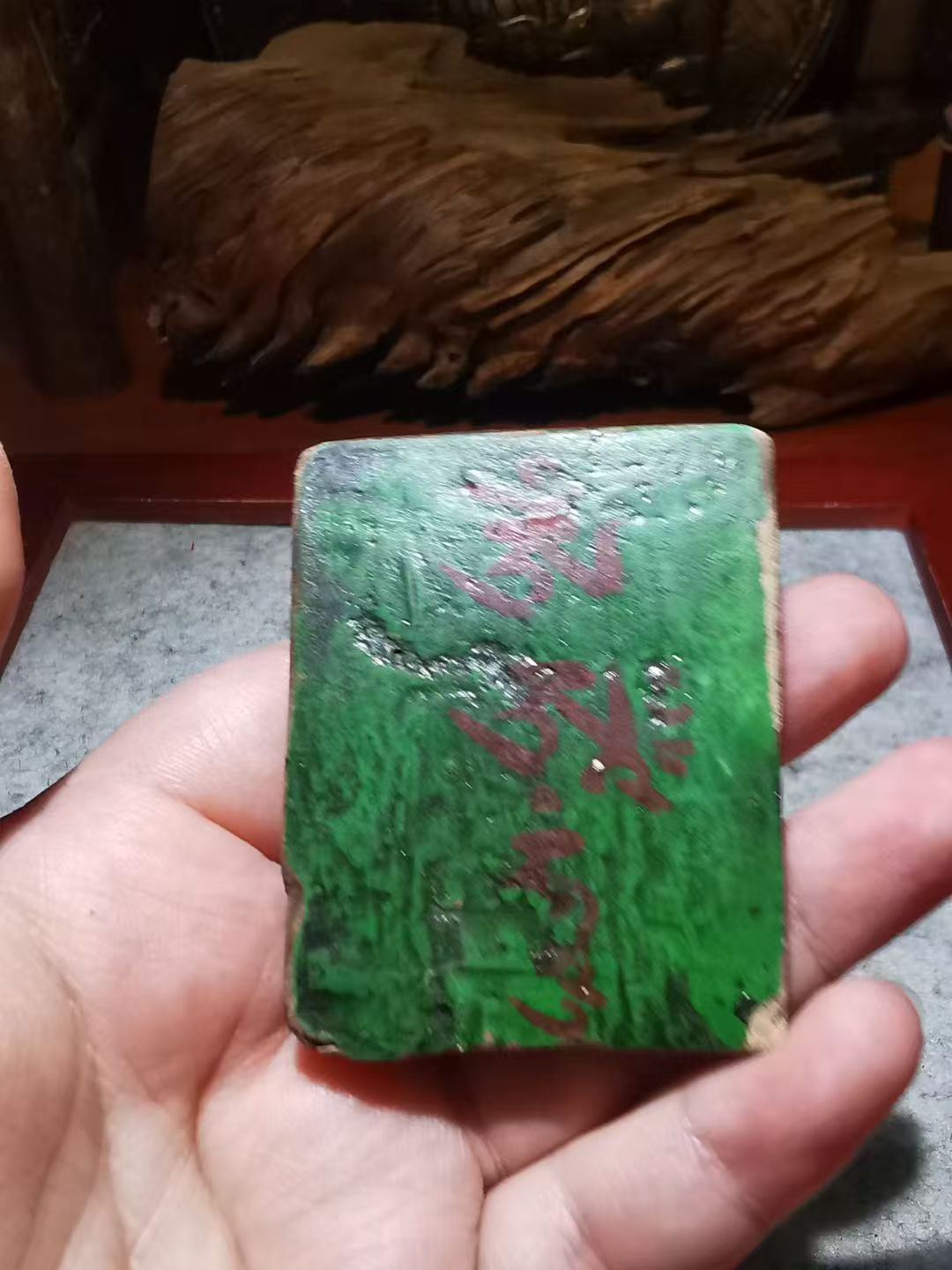
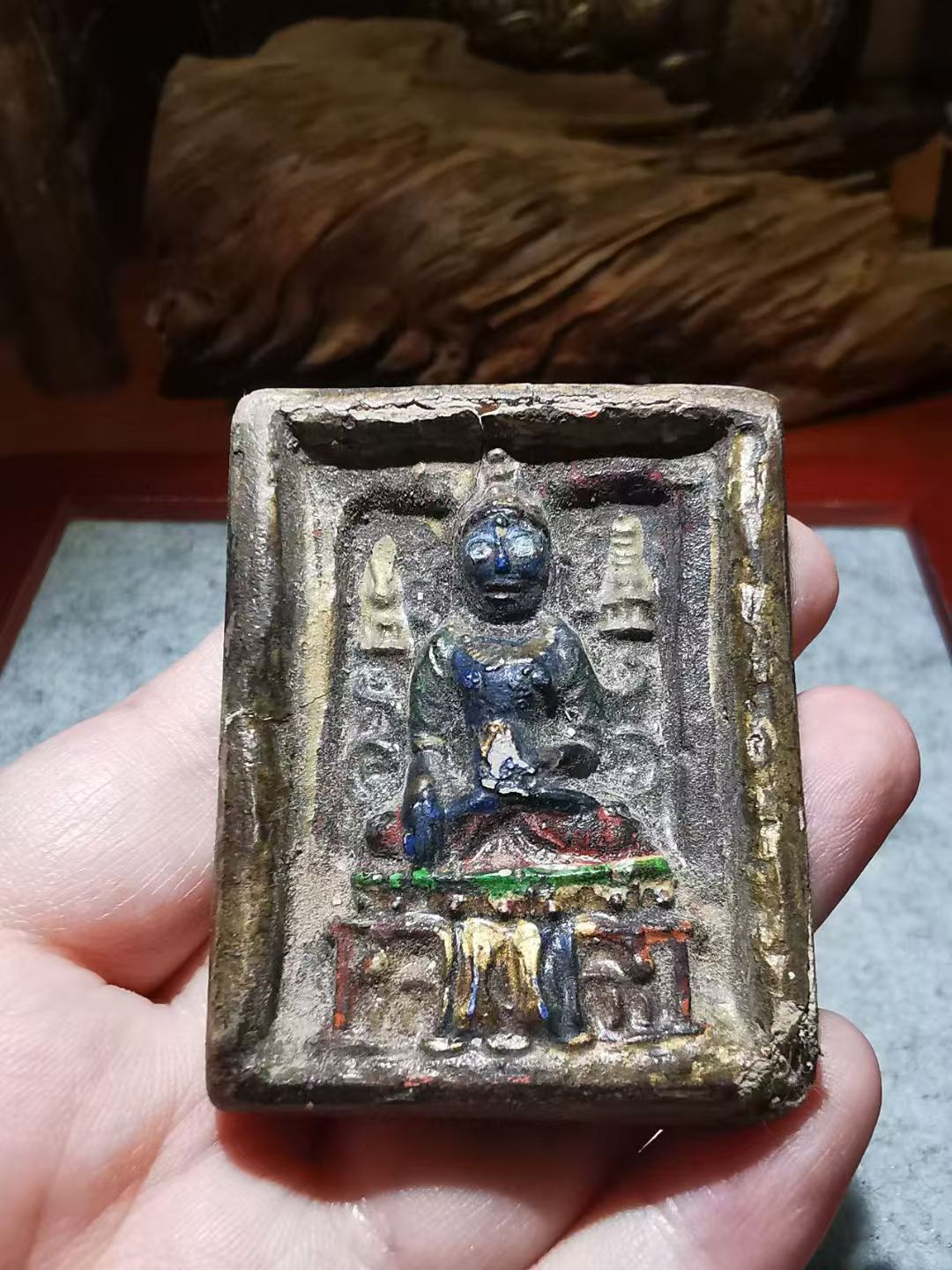
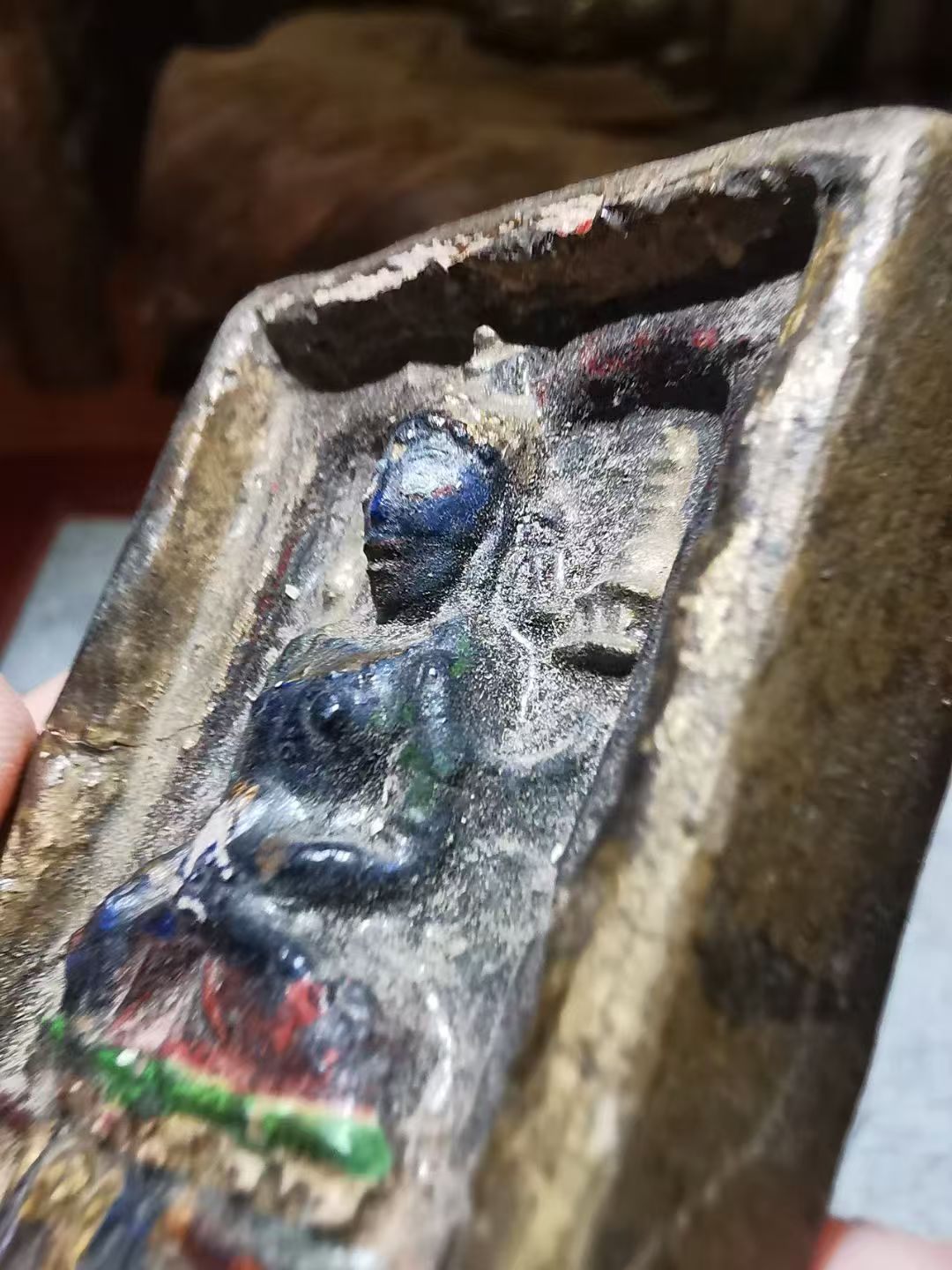
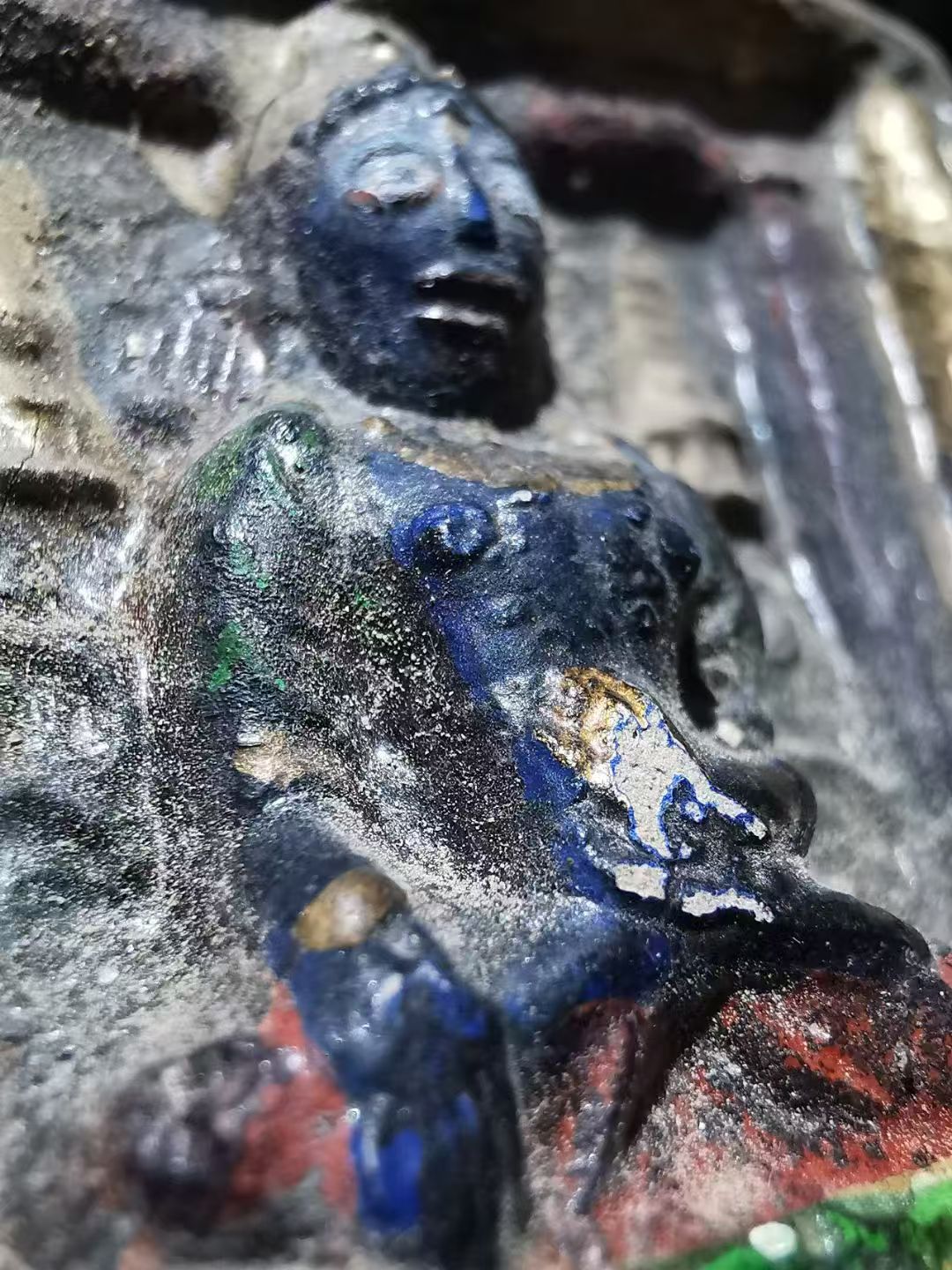
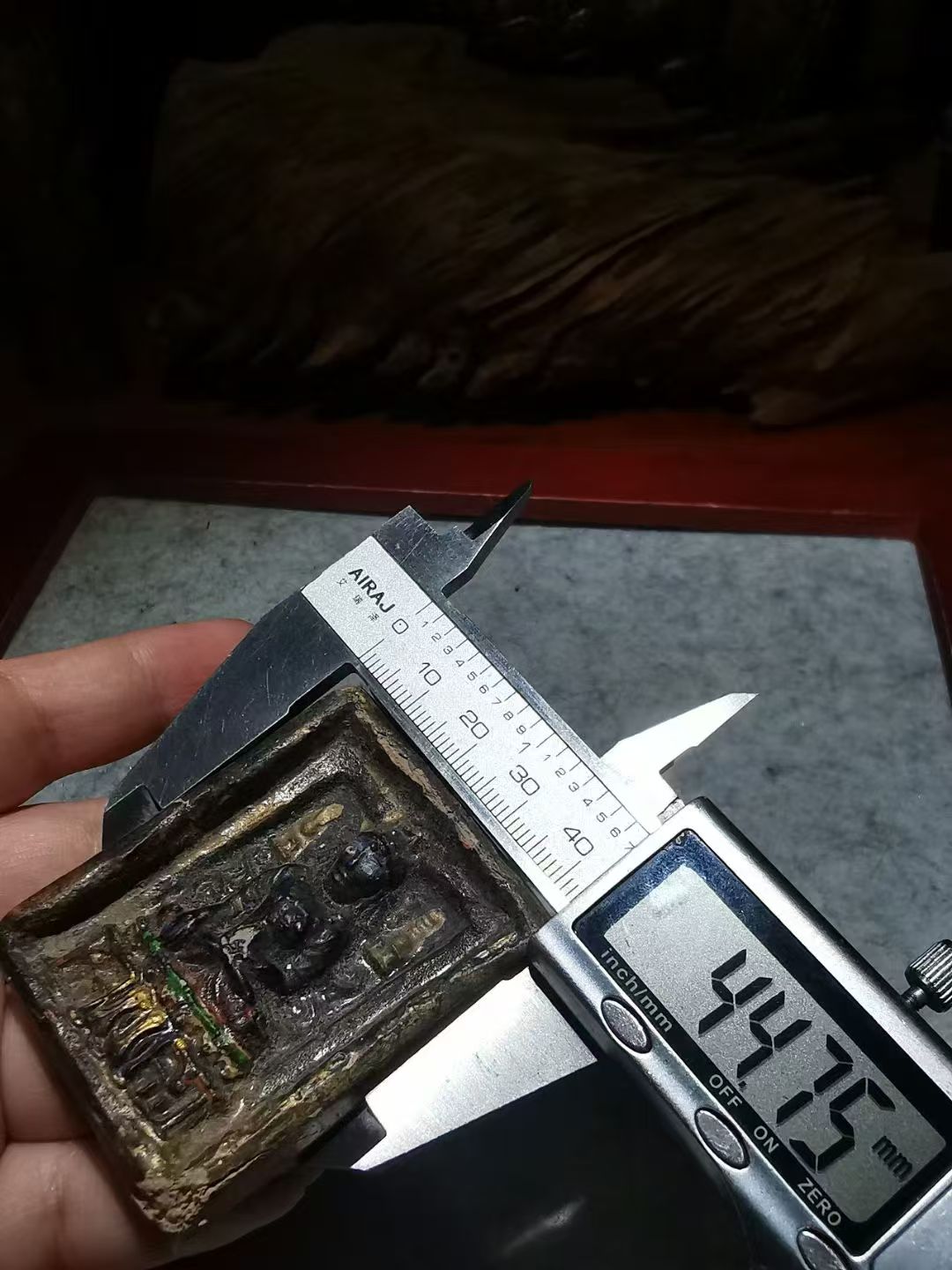
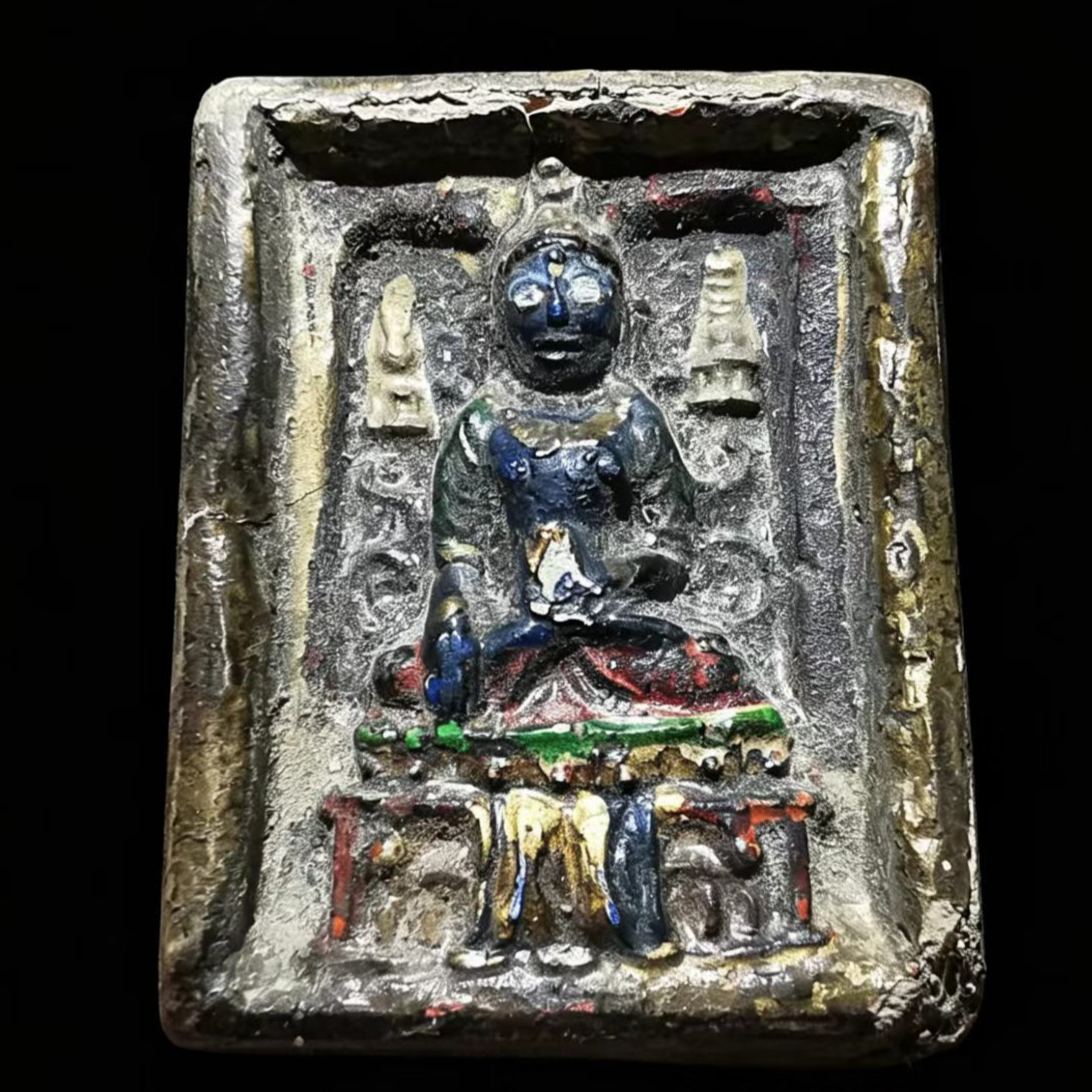
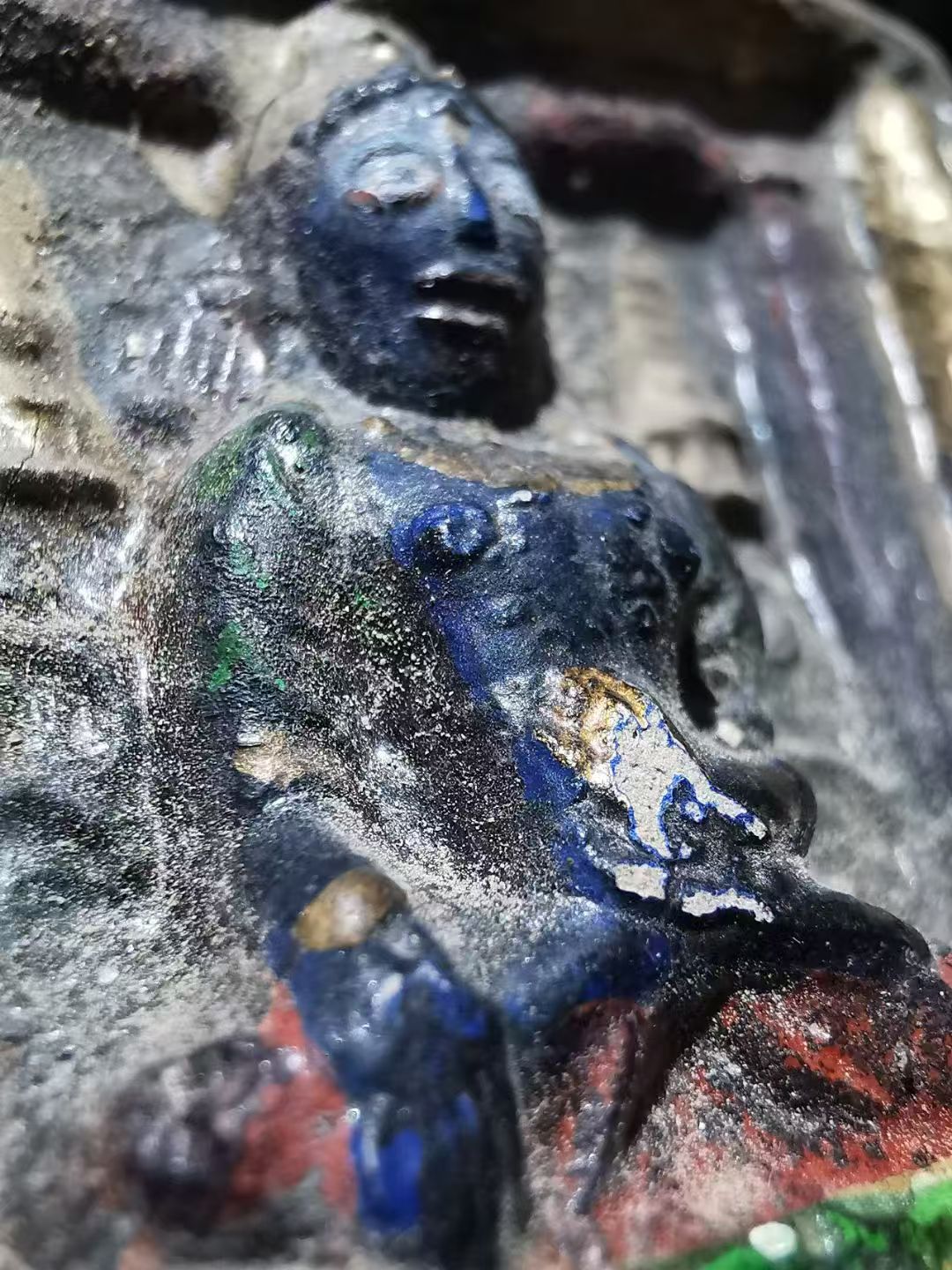
- Principal Deity Identity: Pure Water Vase Guanyin (called "Sacred Guanyin" in Tibetan tradition, the fundamental form of Bodhisattva Guanyin). In Tibetan Buddhism, it is one of the most important representations of Guanyin and is continuous with the Han Chinese Pure Water Vase Guanyin, making it a typical portrayal of Tibetan-Han cultural integration. - Mudra and Attributes: - Right hand hanging downward, touching the ground: represents the wish-granting mudra, symbolizing Guanyin fulfilling all virtuous wishes of sentient beings and saving them from suffering; - Left hand holding a vase: the vase contains sweet dew, symbolizing the purification of negative karma and bestowing blessings and wisdom, the most core symbol of Guanyin. - Craftsmanship and Era: - Material: Traditional Agate clay from Tibet, molded and shaped, with aged body and thick patina, consistent with the characteristics of Qing Dynasty historical tsa-tsa; - Painting: Mineral pigments (lapis lazuli blue, cinnabar red, gold powder), although worn, the color layers remain clear, which is key for dating old tsa-tsa; - Form: Square high-relief, with lotus-shaped stupas on both sides, a classic style of Qing Tibetan tsa-tsa, often used for personal devotion and stupa enshrinement. 2. Cultural Background and Symbolism - In Tibetan Buddhism, Guanyin is called "Four-Armed Guanyin/Sacred Guanyin" and is the guardian deity of Snowy Tibet. Tibetan devotees view Guanyin as the "embodiment of compassion." Having a personal Guanyin tsa-tsa symbolizes safety, smooth fortune, disaster relief, and the fulfillment of blessings and wisdom; - The tsa-tsa itself is a "carrier of meritorious deeds" passed down in Tibet for thousands of years. Crafting and offering a Guanyin tsa-tsa is regarded as a practice for accumulating merit. This historical tsa-tsa carries a century of faith blessings and is a category of Tibetan cultural artifacts with significant cultural value.
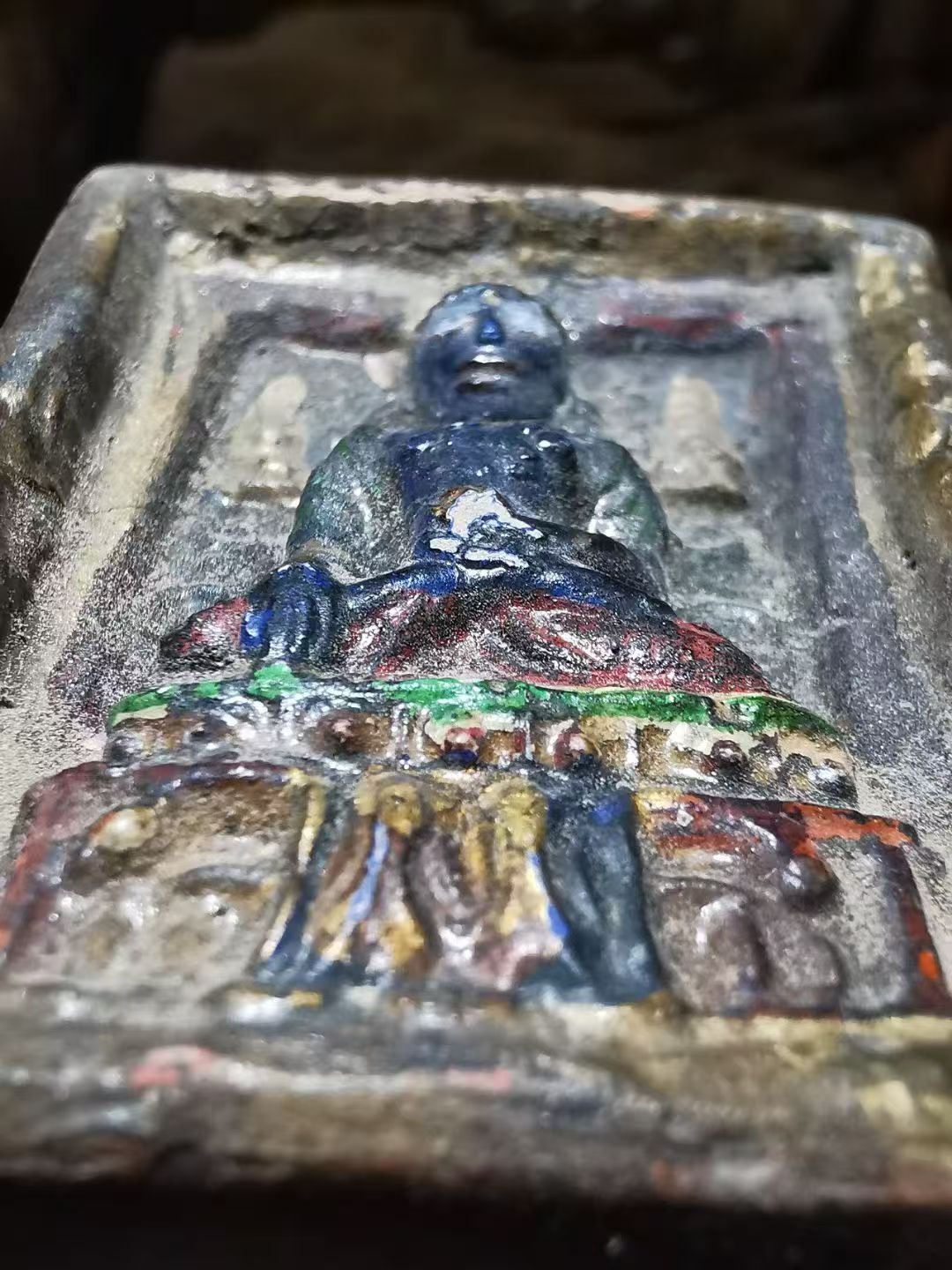
- 主尊身份:净瓶观音(藏传称“圣观音”,是观音菩萨的根本身),在藏传佛教中是观音最核心的造像之一,与汉地净瓶观音一脉相承,是藏汉文化融合的典型造像。
- 手印与持物:
- 右手下垂触地:为施愿印(与愿印),代表观音满足众生一切善愿、救度苦难;
- 左手持净瓶:瓶中盛甘露,象征清净业障、赐予福慧,是观音最核心的标识。
- 工艺与年代:
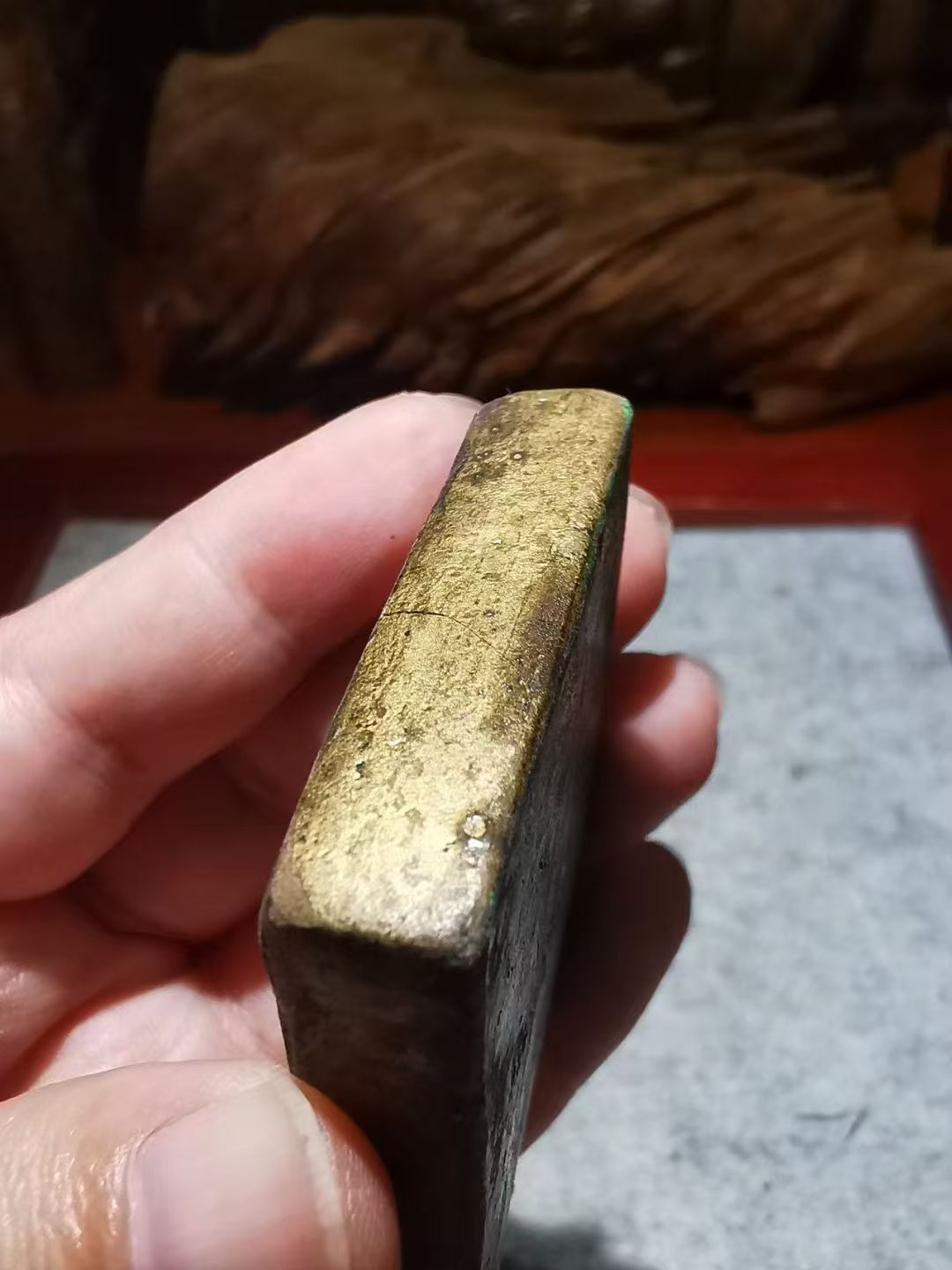
- 材质:藏地传统阿嘎土香泥,脱模成型,胎质老化、包浆厚重,符合清代传世老擦擦特征;
- 彩绘:矿物颜料(青金石蓝、朱砂红、金粉),虽有磨损但色彩层次清晰,是老擦擦的断代核心依据;
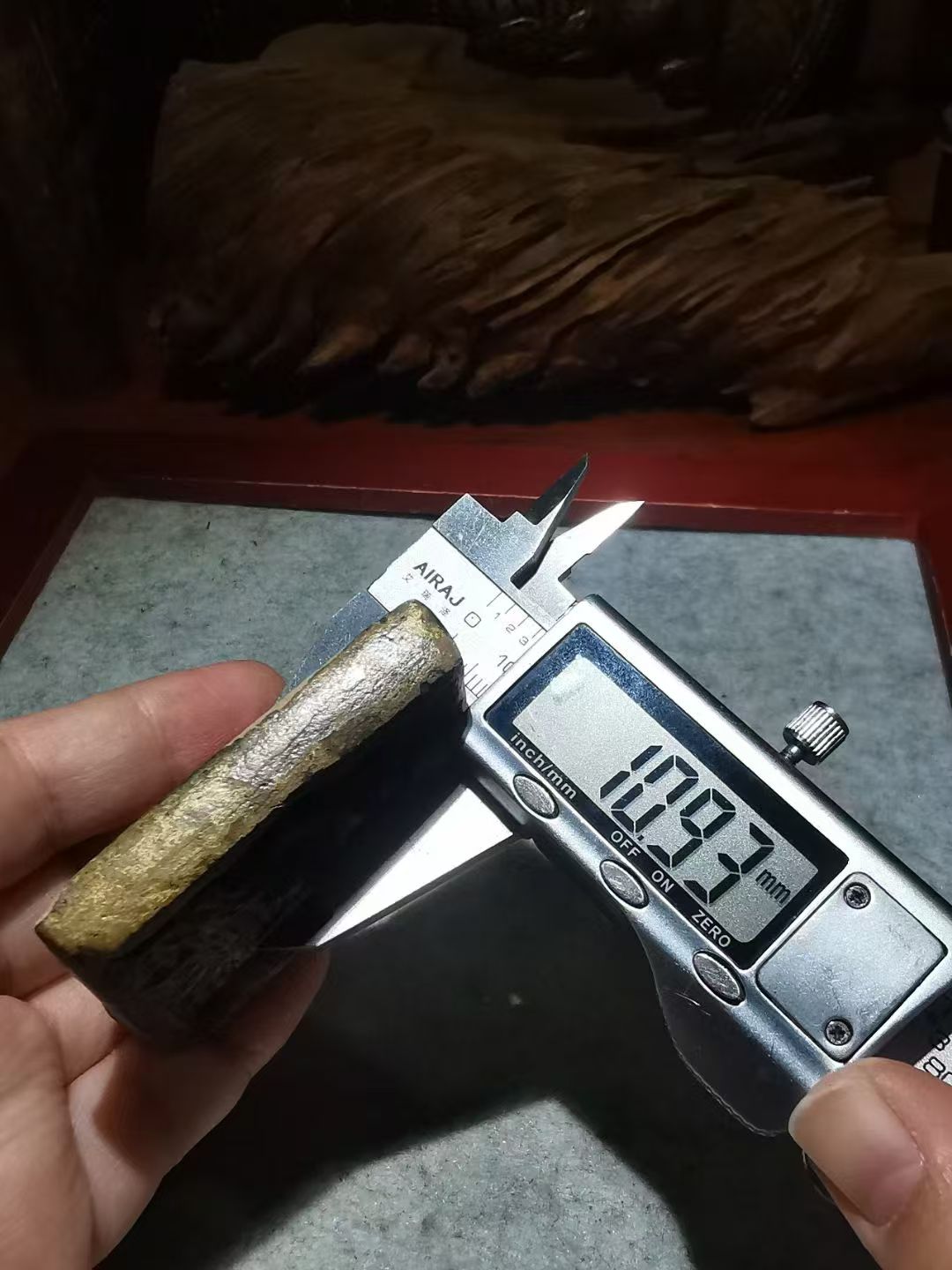
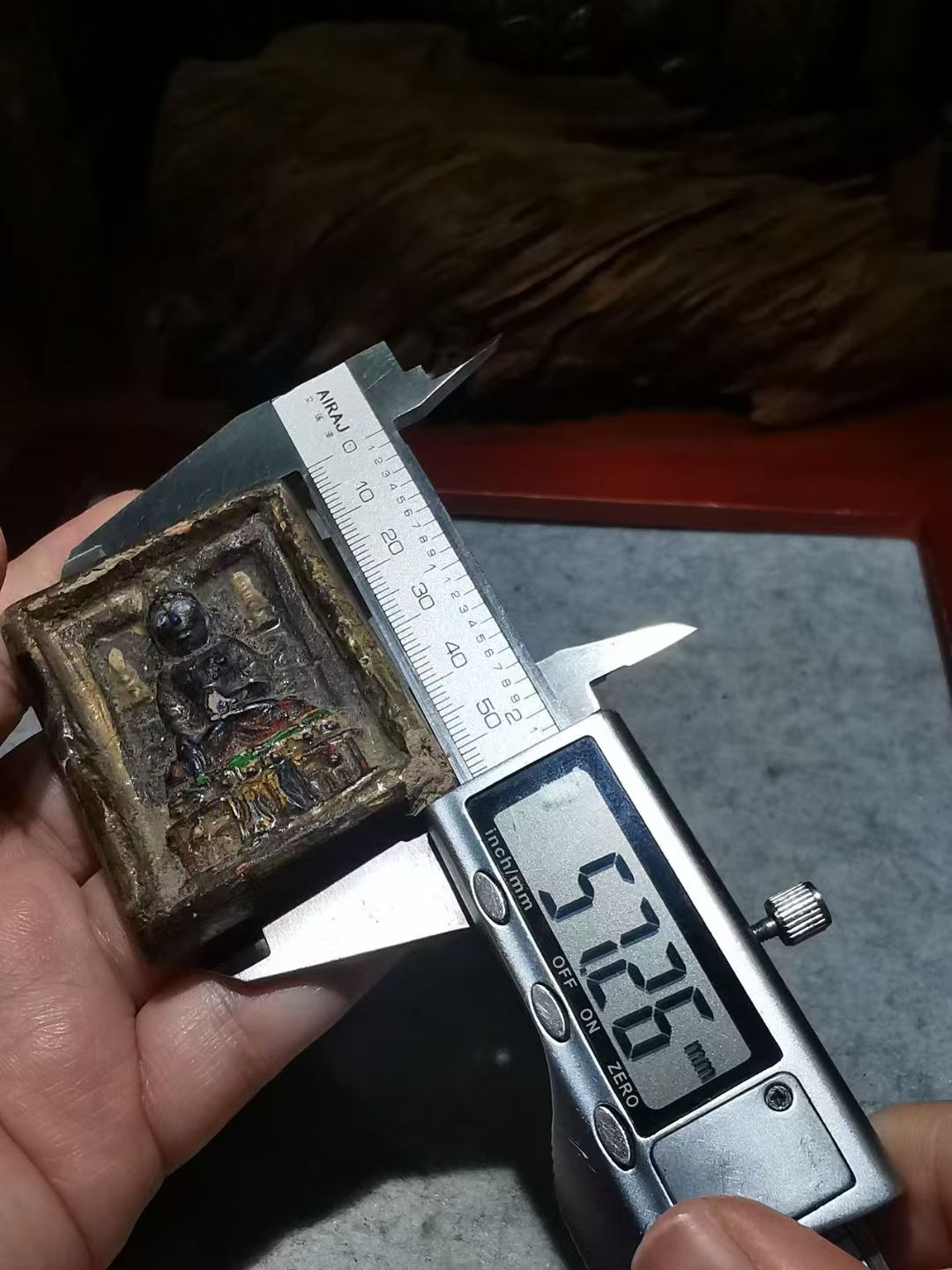
- 形制:方形高浮雕,两侧浮雕佛塔,是清代藏地擦擦的经典制式,多用于随身供奉、佛塔装藏。
2. 文化背景与寓意
- 观音在藏传佛教中被称为“四臂观音/圣观音”,是雪域西藏的守护神,藏地信众将观音视为“慈悲的化身”,随身供奉观音擦擦,寓意平安顺遂、消灾解难、福慧圆满;
- 擦擦本身是藏地传承千年的“善业载体”,制作、供奉观音擦擦被视为积累福报的修行,这件传世老擦擦承载了历年的信仰加持,是藏传文玩中极具文化价值的品类。