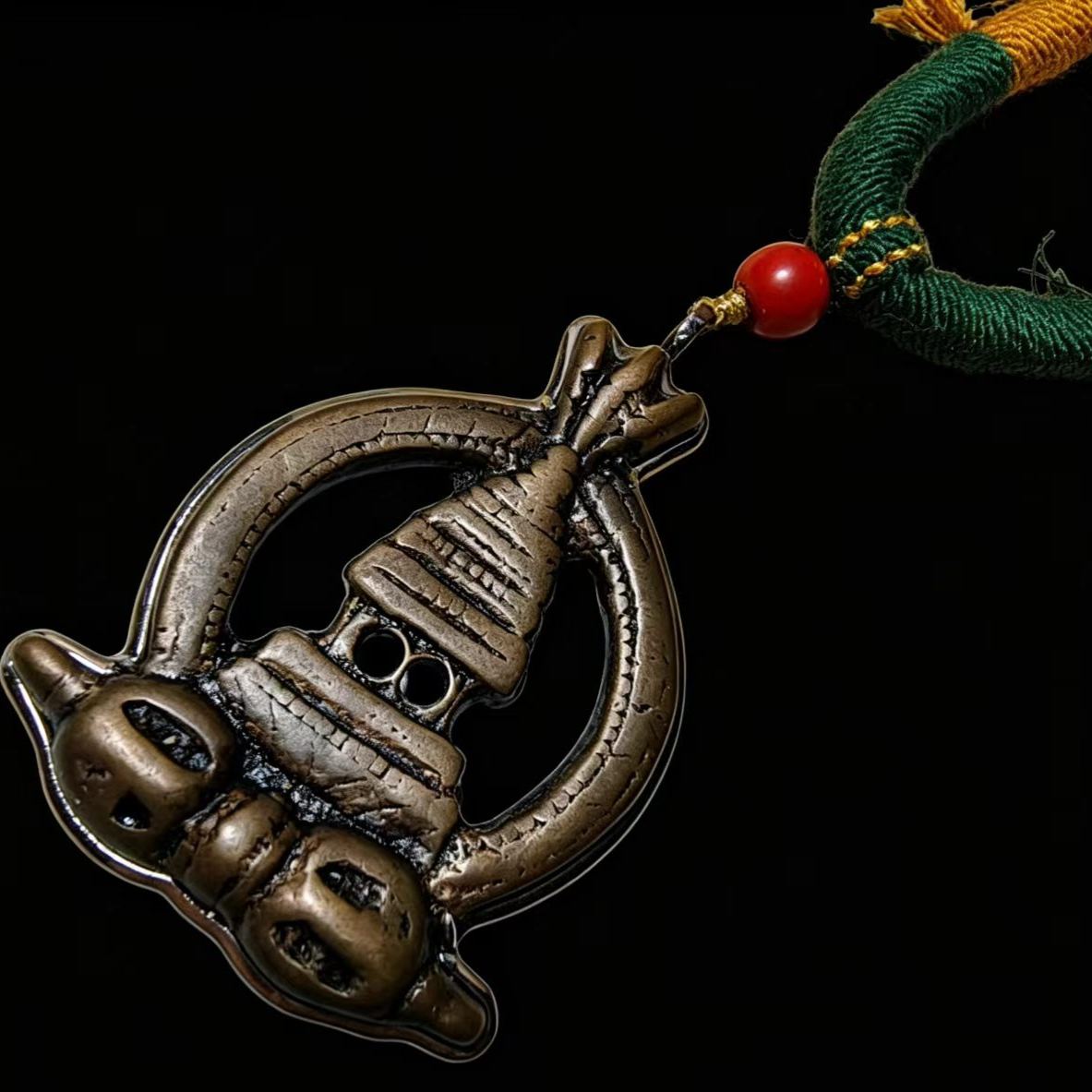
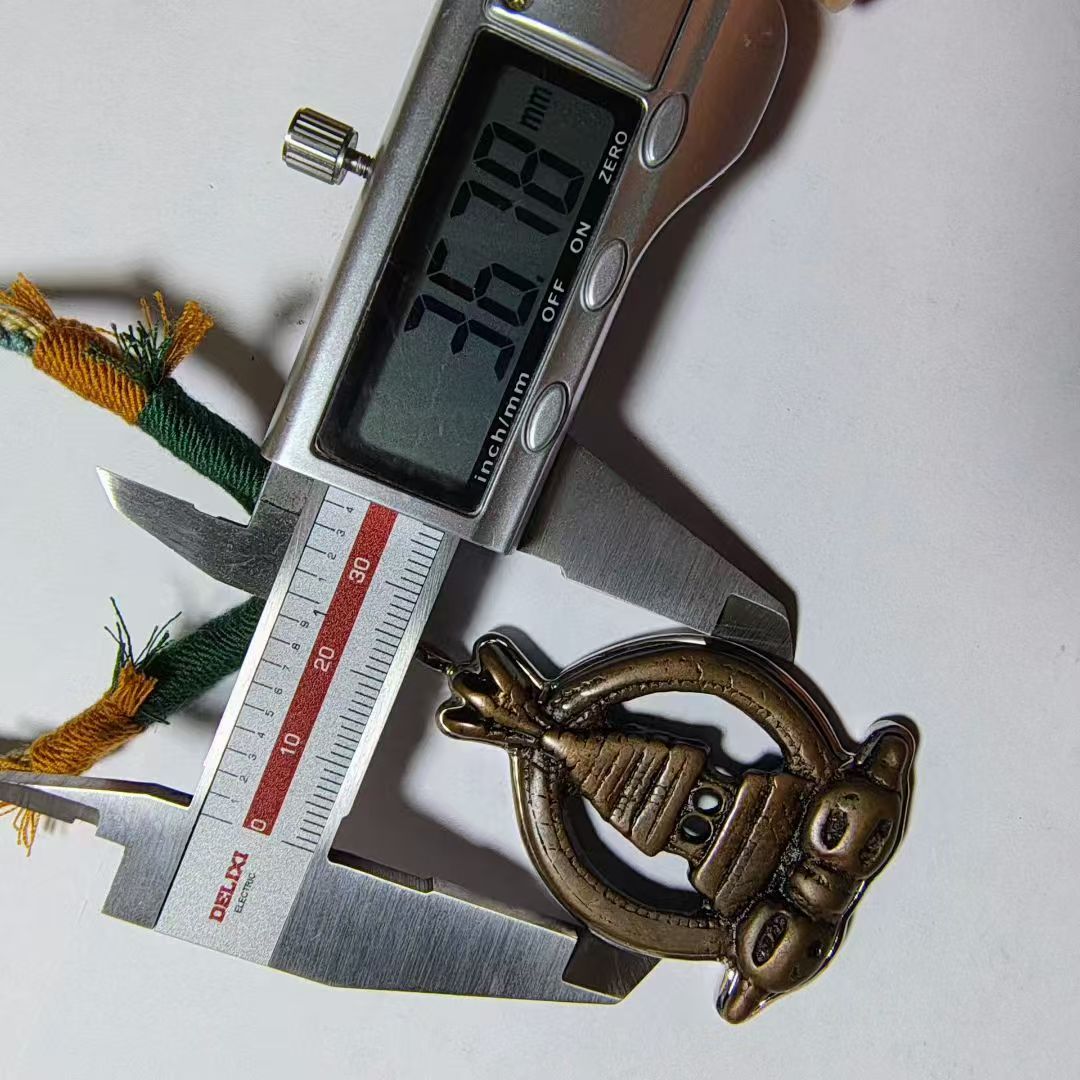
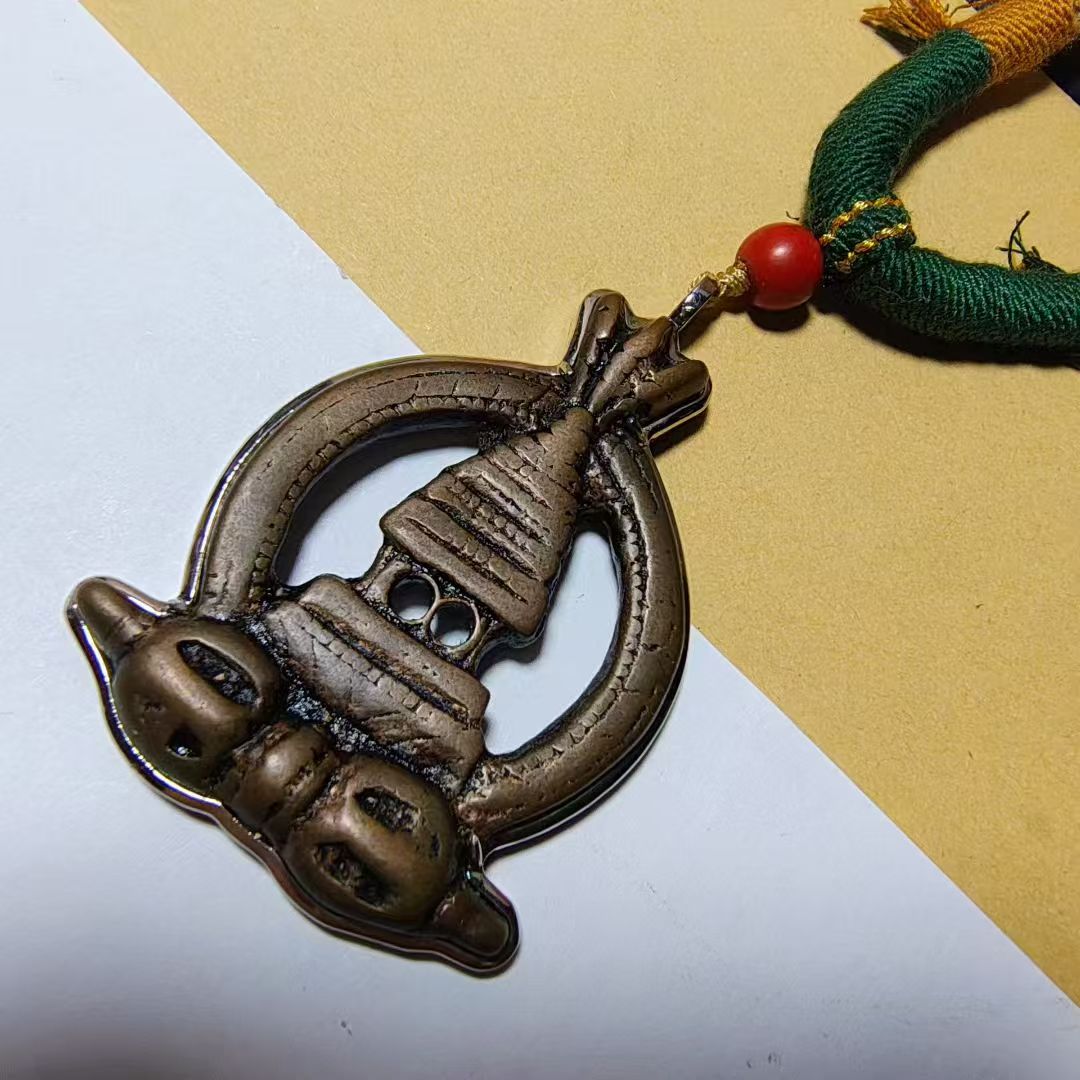
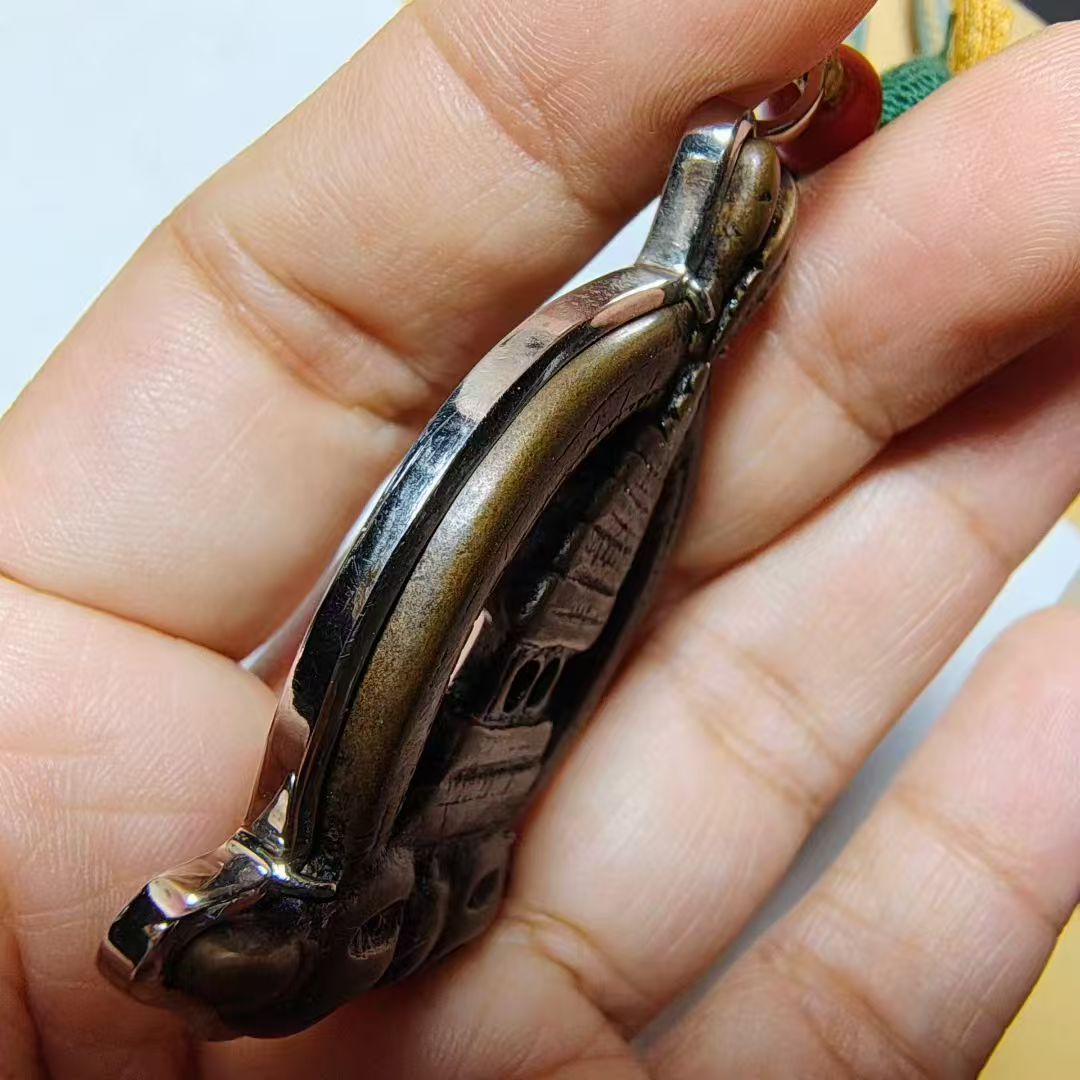
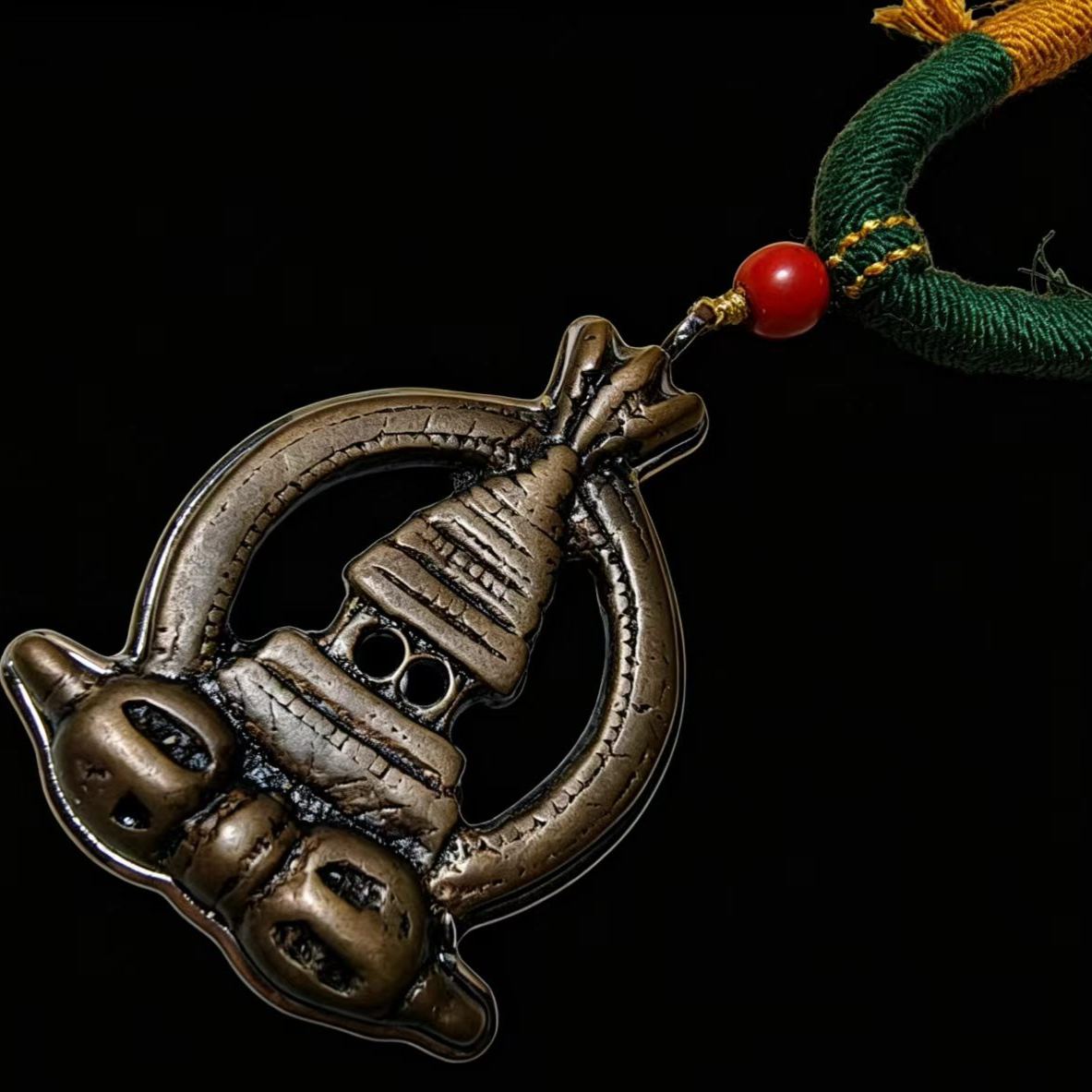
15084 Tibetan-style Old Lima Bronze Vajra Relic Stupa Necklace
💰💰798
1990s
At first glance, this piece is extraordinary. Combining these two themes together, it becomes an unbeatable object. Made into a pendant or carried around, it’s basically like a talisman. The patina is smooth and evenly coated, with delicate and uniform weathering.
In Tibetan Buddhism, the vajra symbolizes invincible, indestructible wisdom and the Buddha nature of true reality. It can cut through all kinds of troubles, destroy obstacles and demons that hinder one’s spiritual practice. It’s held by various deities in esoteric Buddhism or used by yogis as a ritual tool. 🙏🙏🙏 The deities of the Vajra division in the Mandala all hold vajras. Practitioners of mantras also often carry it because this vajra represents the Tathagata’s diamond-like wisdom, used to dispel inner demons of ignorance and delusion, as well as external obstacles.
The relic stupa originated in India, initially built to house the “relics” (śarīra) produced after the cremation of Shakyamuni Buddha. Later, the custom was continued by Buddhist monks and masters to store their own relics or other valuable scriptures and ritual items. In China, relic stupas are usually part of temple complexes, becoming an important component symbolizing sacredness and sanctity in Buddhism.
The main purpose of a relic stupa is to store the relics of Shakyamuni Buddha or senior monks from later generations. Relics are the crystallization of a Buddhist practitioner’s cultivation in morality, meditation, and wisdom, symbolizing the practitioner’s achievements and the transmission of spiritual power.
Besides relics, some stupas also preserve and venerate other Buddhist items, like sacred texts. Worshipping a relic stupa is a way for people to express devotion and gratitude to the Buddhas. The stupa is regarded as an embodiment of the Buddha and has a calming effect on the mind.
Take the Wuan Relic Stupa for example. Located in Wuan City, Hebei Province, it was first built during the Northern Song Dynasty and is a treasure of ancient architectural art. The Wuan Relic Stupa has witnessed the rise and fall of dynasties and social changes, and thanks to its excellent earthquake resistance, it has survived multiple natural disasters, becoming a true witness of time.
15084 藏传老利马铜金刚杵舍利塔项链
💰💰798
这尊一看就殊胜,这两个题材加在一起,无敌的存在,编成挂件或者随身携带相当于一个护身符了,包浆油润细腻均匀,风化细腻均匀,
在佛教密宗中,金刚杵象征着所向无敌、无坚不摧的智慧和真如佛性,它可以断除各种烦恼、摧毁形形色色障碍修道的恶魔,为密教诸尊之持物或瑜伽士修道之法器。[合十][合十][合十]曼荼罗海会之金刚部诸尊皆持金刚杵。真言行者亦常携行,盖以此杵象征如来金刚智,用以破除愚痴妄想之内魔与外道诸魔障。
舍利塔起源于印度,最初是为了埋葬释迦牟尼圆寂后火化产生的“舍利子”而建。后来,这一习俗被佛教高僧和法师沿用,用于埋葬自己的“舍利子”或其他贵重的经书、法器等。在中国,舍利塔通常与寺庙相伴,成为寺庙的重要组成部分,象征着佛教的圣洁和神圣。
舍利塔的主要作用是存放佛祖释迦牟尼或后世高僧的舍利子。舍利子是佛教修行者戒定慧修行的结晶,象征着修行者的成就和法力的传承。
除了舍利子,一些塔还会珍藏和供奉其他佛教物品,如佛经等。
礼拜舍利塔是人们表达对诸佛皈依和感恩的方式,舍利塔被视为佛陀的化身,具有安定人心的作用。
以武安舍利塔为例,这座塔位于河北省武安市,始建于北宋年间,是古代建筑艺术的瑰宝。武安舍利塔不仅见证了朝代更迭和社会变迁,还因其卓越的抗震性能在多次自然灾害中屹立不倒,成为时间的见证者。